March 14, 2007
Culture Center of Taipei Economic and Cultural
Representative Office in the United States
901 Wind River LaneGaithersburg, MD 20878
FAX: (240) 235-5410
Dear Sir/Madam:
We are writing to you to express our grave concern over the proposed forcible eviction of the residents of Lo Sheng Hospital in Taiwan from the place that has become their home as well as the proposed complete destruction of this internationally significant site in the history of leprosy.
IDEA is the largest international advocacy organization and network of support for individuals whose lives have been challenged by leprosy, also referred to as Hansen’s Disease. Our leadership is largely made up of individuals who have themselves had this disease.
Last year, IDEA was granted Special Consultative Status with the Economic and Social Council of the United Nations and, as such, can testify before the UN Human Rights Commission on matters of great concern to us.
The forced displacement from their homes of people who were first separated from their families due to society’s fear of leprosy and are now facing a second displacement because land rights are being given priority over human rights, is an issue that we plan to bring before the UN Human Rights Commission.
Prior to the advent of a cure for leprosy, people throughout the world were forcibly separated from their families and isolated in hospitals far removed from society.
This was done for the supposed protection of society at great cost to the lives of the individuals and their families. In fact, in some cases, whole family lines came to an end if an only child had leprosy.
Now that the land that many of these hospitals are located on has become valuable, plans are made for the use of the land that does not take into consideration the ethical and humanitarian issues surrounding the repeated displacement of people from the places that have become their homes.
Many countries throughout the world have recognized the historical significance of the leprosy hospitals where people have been isolated as well as the rights of individuals to live out their lives in the places that have become their homes. This has resulted in creative efforts to develop adapted use facilities that work to benefit society in many ways and also provide for preserving the history and the lifestyle of individuals living in these places (please see attachment for examples of some of these).
A panel discussion will be held on this issue at the next International Leprosy Congress to be held in Hyderabad, India in January, 2008. The residents of Lo Sheng have already been invited to designate a representative to serve on the five-member panel that will lead the discussion. They have accepted this invitation.
We fervently hope that the government and people of Taiwan will recognize that the residents of Lo Sheng are a national treasure. Through their lives, they have the ability to teach present and future generations about issues fundamental to the promotion of peace and justice in our world. They have undergone separation from that which was most dear to them yet do not harbor revenge or hatred. They simply request that their history be honored and that they be allowed to remain in their home.
We hope that we can all work together in a unified effort to ensure that this chapter in Taiwan’s history will be remembered as an example of justice and humanity rather than an example of the use of force and coercion against elderly individuals who gave up their families and their futures a lifetime ago in order that society could feel safe.
Please feel free to contact me if you have any questions.
Sincerely,
Anwei Skinsnes Law,
M.P.H.International Coordinator,
IDEACoordinator, Oral History Project, International Leprosy Association
Global Project on the History of Leprosy.
2007年3月30日 星期五

2007年3月29日 星期四
United Nations Press Release -- 20 July 2005
xxxxxxxxxx
UN EXPERTS EXPRESS CONCERN OVER IMMINENTEVICTION OF TAIWANESE RESIDENTS IN LO-SHENGSANATORIUM
xxxxxxxxxx
20 July 2005
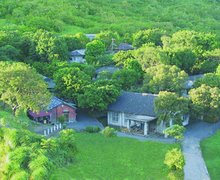
Paul Hunt, the United Nations Commission on Human Rights Special Rapporteur on the right of everyone to the enjoyment of the highest attainable standard of physical and mental health ("the right to health", and Miloon Kothari, Special Rapporteur on adequate housing as a component of the right to an adequate standard of living, issued the following statement today:The Special Rapporteur on the right of everyone to the enjoyment of the highest attainable standard of physical and mental health ("the right to health") and the Special Rapporteur on adequate housing as a component of the right to an adequate standard of living express their profound concern over information received concerning the imminent eviction of residents living in Taiwan's Lo-Sheng Sanatorium for individuals with leprosy.Lo-Sheng Sanatorium, an area of 30-hectares, is located in Sinjhuang, Taipei County and was originally built in 1930. The sanatorium originally served as an isolation hospital for leprosy patients. However, in recent years the 300 residents of Lo-Sheng have benefited from a village-like, community way of life that allows for their independence in a quiet and peaceful environment. Many individuals without limbs have "scooters", providing them access outdoors to enjoy the gardens surrounding the sanatorium.The evictions were reportedly to take place on July 20, 2005 to allow for the creation of a Mass Rapid Transit System ("MRT") by the Taipei Rapid Transit Corporation. Residents of Lo-Sheng Sanatorium will allegedly be relocated to the Hui-Long Hospital.The Special Rapporteurs urge the authorities to ensure that the human rights of people affected by leprosy are fully respected. In particular, they remind the authorities of their obligations under international human rights law, including the International Covenant on Economic, Social and Cultural Rights, especially with regard to the right to health and the right to adequate housing. The United Nations Committee on Economic, Social and Cultural Rights has stated that "forced evictions are prima facie incompatible with the provisions of the Covenant and can only be carried out under specific circumstances".The Special Rapporteurs urge the authorities to explore all feasible alternatives in consultation with the residents of Lo-Sheng Sanatorium. If no solution can be found that would allow residents to remain, legal remedies or procedures should be provided to residents that are affected by eviction orders, along with adequate compensation for any property affected, both personal and real. Any evictions that are considered justified should be carried out in strict compliance with the relevant provisions of international human rights law and in accordance with the general principles of reasonableness and proportionality.
Source: http://www.unhchr.ch/huricane/huricane.nsf/view01/63355551F63FFCAAC125704400573FB7?opendocument
訂閱:
文章 (Atom)